
Plant identification apps. Whether you're passionate about gardening or simply curious about the plants you encounter on your walks, plant identification apps are an indispensable tool. With just a photo, you can discover the names of flowers, trees, and even medicinal plants. These apps also offer detailed information on the care, characteristics, and uses of the species you encounter. Learning about the nature around you has never been easier.
Indeed, mobile technology is transforming the way we interact with the natural world. You can download free apps directly from the Play Store or App Store to explore this fascinating universe. For example, by downloading these tools, you'll have access to features like plant identification by photo and leaf and flower recognition in just a few seconds. So, if you're looking to improve your botanical knowledge, this article will guide you through the best apps available on the market.
Best Apps for Plant Recognition: How Do They Work?
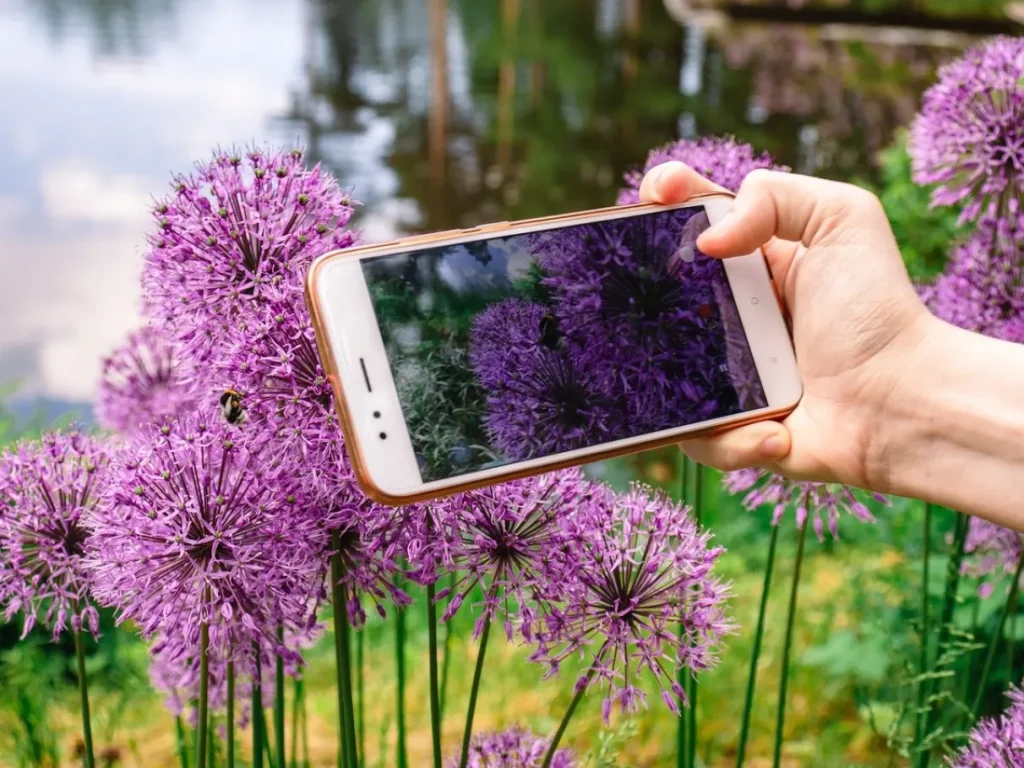
Essentially, plant identification apps use artificial intelligence and robust databases to analyze images captured on your phone. This way, when you take a photo of an unknown plant, the app compares its characteristics with thousands of previously cataloged records. Furthermore, many of these apps also allow you to save your discoveries and create a digital diary of identified species. Therefore, they are perfect for gardening enthusiasts, students, and researchers alike.
PlantSnap
PlantSnap is one of the most popular online plant identification apps, with millions of downloads available on the Play Store. It's known for its accuracy in recognizing flowers, trees, and even mushrooms. The app offers a free version that allows you to easily identify plants, but also a premium version for users who want additional features.
On the other hand, PlantSnap's intuitive interface makes it easy to use even for beginners. To download it for free, simply access your phone's app store and install the app in just a few minutes. You can start exploring the plant world immediately after downloading.
PictureThis
PictureThis is another incredible app that excels in the plant recognition niche. According to users, it's particularly useful for identifying medicinal plants and rare flowers. Furthermore, the app offers personalized tips on how to care for the identified species, making it a valuable gardening tool.
To download now, simply go to the Play Store or App Store and search for "PictureThis." While the free version is quite comprehensive, the premium subscription offers additional benefits, such as alerts about pests and diseases that may affect your plants. Therefore, it's an excellent choice for those seeking practicality and efficiency.
Search by iNaturalist
Seek by iNaturalist is a fantastic option for those who prefer a free plant recognition app. This app is ideal for beginners, as it doesn't require registration and works quickly and easily. It also encourages users to explore local biodiversity by offering fun achievements and challenges.
Once you download it, Seek uses your phone's camera to identify plants in real time. This means you don't even need to take a photo to get results. Right after installing the app, you can start exploring the plant world in an interactive and educational way.
Leafsnap
Leafsnap is an expert-developed app focused on identifying medicinal plants and trees. It uses advanced algorithms to analyze leaf characteristics and to supply accurate results. Furthermore, the app includes detailed information on the traditional and scientific uses of the species.
Although Leafsnap was initially launched for specific regions, it is constantly expanding its database. Therefore, we recommend downloading the app from the Play Store to stay up-to-date with updates and take full advantage of its features. Without a doubt, it is an excellent tool for anyone wanting to learn about medicinal plants.
SmartPlant
SmartPlant isn't just a plant identification app, it's also a platform that offers personalized care for your favorite species. Download it for free from the App Store and you'll get access to expert gardening tips and a Q&A with professionals.
Additionally, the app has an active community where users share experiences and advice. This way, you can learn from other enthusiasts while improving your gardening knowledge. In short, SmartPlant is a smart choice for those who want to take good care of their plants.
How to Choose the Best App for Your Needs
Now that you know the main plant identification apps, it's important to consider your specific needs before deciding which one to download. For example, if you're looking for an app focused on medicinal plants, Leafsnap might be the best choice. On the other hand, if you prefer a more comprehensive experience, PlantSnap or PictureThis might be more suitable.
In conclusion, all of these apps offer incredible features to help you explore the plant world. So, don't waste time and download them now to start discovering the name of any plant with your phone.
How a photo becomes identification.
These apps use image recognitionThe photo is compared to a database of millions of cataloged specimens, and the system returns the most similar species with a degree of confidence. There is no botanist on the other side — there is a model trained on images.
This explains the successes and failures. A common plant, frequently photographed, has a high success rate. A poorly documented regional species, or a plant in an atypical stage, easily confuses the system.
How to take better photos
- Photograph the isolated leaf., with the cleanest background possible — the palm of your hand or a sheet of paper will do.
- Take more than one photo: Leaf, flower, fruit, and stem bark. Several apps accept multiple images and improve significantly because of this.
- Diffused natural light. Direct sunlight blows out the contrast and dulls the veins.
- Frame the shot closely and in focus. A photo of an entire bush rarely identifies it.
- Record the location. Some apps use the region to rule out species that don't occur there.
Where the result needs to be treated as a guess.
This is the crucial point of the category. The identification comes with a confidence percentage, and it's worth reading that number. Below a clearly highlighted result, treat it as a suggestion, not as an answer.
And there is a use that It shouldn't depend on an app.Deciding whether a plant or mushroom is edible is crucial. Toxic species can look like edible ones, and misidentification in this context has serious consequences. The same applies to medicinal plants and determining if something is dangerous for a child or pet—in these cases, the answer comes from a professional, and in emergencies, from a poison control center.
What apps also offer
- Diagnosis of a problem in the leaf — stain, plague, defect. Useful as a clue, subject to the same reliability limit.
- Watering reminder by species.
- Collection notebook, with a history of what you identified and where.
- Collaborative base, In this study, experts review community identifications—these are the most reliable in the category.
Frequently Asked Questions
Does it work without internet?
Generally not: the comparison happens on a server. Some have a smaller offline database.
Why did the results differ between the two apps?
Different foundations and models. When the two agree, trust increases significantly.
Can you tell the difference between cacti and succulents?
These are among the most difficult groups, because many species are visually almost identical. The flower and thorn help.
Is it useful for determining if it's poisonous?
Do not use as a sole source. Due to the risk of poisoning, seek professional advice.