Free Apps to Simulate Haircuts
 Put Ricardo Sanches
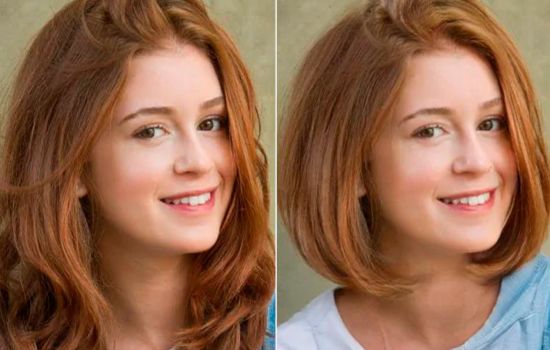
Nowadays, technology allows us to experiment with new looks without leaving home. If you're thinking about changing your look and want to try out different haircuts before making a decision, free haircut simulator apps are the perfect solution. These digital tools allow you to visualize how you would look with a new hairstyle using just a photo of yourself. Plus, many of these apps are available for download on the Play Store, making access even easier.
Besides being practical, these apps offer advanced features that can transform your haircut-choosing experience. With options for both men and women, you can find the best app to try out women's haircuts or even an online men's haircut simulator. Download these free apps now and explore all the possibilities of virtual hair transformation for free. This is undoubtedly an indispensable resource for anyone looking to update their look.
How to Choose the Best Hair Changer App
When searching for the best free haircut apps, it's important to consider a few factors to ensure a good experience. First, check if the app offers features like automatic face adjustment, a variety of styles, and the ability to upload personal photos. This will make it easier to find one that meets your specific needs, whether you're looking for a casual look or something more daring.
Another important point is the ease of use and the quality of the simulations. Some virtual hair cutting tools stand out for their intuitive interface and realistic results. Furthermore, by accessing the Play Store, you will find several options to download apps, allowing you to compare features before deciding which one will be your favorite. Check out two simulators you can find on the Play Store below.
Hairstyle Try On
Hairstyle Try On is another excellent option among the free haircut simulation apps. It allows you to try out haircuts using photos, meaning you can use a photo of yourself to see how you'd look with different styles. Available for download on the Play Store, this app offers a simple and fun experience for those looking to explore new looks.
Furthermore, Hairstyle Try On stands out for its precision and variety of options. It includes everything from classic cuts to modern hairstyles, allowing you to find the perfect style for any occasion. By downloading this free app, you'll have access to a virtual tool that can be used both for inspiration and to safely plan a makeover. Don't miss out!
Hair Makeover
If you're looking for a mobile beauty app that goes beyond traditional haircuts, Hair Makeover is a great choice. Available for free download on the Play Store, this app offers a complete hair transformation experience. You can try not only haircuts, but also hairstyles and accessories, creating unique and personalized looks.
Furthermore, Hair Makeover is known for its practicality and fast results. By downloading the app, you'll have access to a tool that simplifies the process of choosing a new look. With a variety of options and modern designs, this app is ideal for those who want to innovate without compromising the natural look. resultTry it now and discover how easy it is to digitally change your look.
Conclusion
In short, free apps for simulating haircuts are indispensable tools for anyone who wants to innovate their look. From Hairstyle Try On to Hair Makeover, each of these apps offers unique features that make choosing a new style easier. Furthermore, by downloading these apps for free from the Play Store, you'll have access to a practical and fun experience. So don't waste any time and explore the possibilities of these virtual haircut tools right now.
How does the simulation fit a cut on your face?
Behind the hairstyle change lies a short, always identical sequence. First, the app locates reference points on the face—corners of the eyes, base of the nose, chin contour, forehead line. These are dozens of coordinates that describe the geometry of the face and the tilt of the head in the photo.
Next comes the segmentation: the program separates, pixel by pixel, what is hair from what is background and skin, and produces a mask. The new cut is drawn on this mask, aligned with the implantation line and the proportions measured in the previous step. Some applications use generative models, which redraw the entire region instead of overlaying a ready-made image. In both approaches, the input photo defines almost the entire result.
The recipe for a photo that yields a clean simulation:
- Frontal, diffused light, preferably near a window. Backlighting creates a dark edge and blurs the mask.
- Face straight ahead, look at the camera, head not tilted.
- Visible forehead and hair pulled back. Bangs covering the hairline push the mock cut down.
- A smooth background in a contrasting color to the hair.
- A second profile photo, to judge the length at the nape of the neck and lateral volume.
What the simulation leaves out
What appears on the screen is a rendered hair strand pasted onto your face. It's not your own hair, and that explains the distance between the preview and the salon mirror.
- Density and curl pattern of your hair. The same haircut falls straight on straight hair and gains 3 or 4 centimeters of volume on curly hair.
- Hair whorl, receding hairline, and hairline height. These are details that a professional can read on the scalp, not in a photo.
- Behavior after drying, and behavior in three weeks. Short haircuts usually require a touch-up every 3 or 4 weeks to maintain the shape.
- Execution. The image is a visual reference; the result depends on the technique of the person cutting.
Use the shot as a starting point for conversation in the salon, and also discuss the length in centimeters and the camera used on the sides.
Frequently Asked Questions
Why does the simulated hair have that strange edge?
It's a flaw in the segmentation mask. Loose strands, a background the same color as the hair, and a strong shadow on the outline make pixel-by-pixel separation difficult, and the edge comes out jagged or faded.
Is it better to simulate with a photo or with the live camera?
These are distinct uses. The live camera tracks the face's structure and shows the cut in motion, which helps in judging volume. The still photo allows you to compare two or three options side-by-side without rushing.
Does the app accurately depict my face shape?
It measures approximate proportions between the width of the forehead, cheekbones, and jaw and classifies them into fixed categories. The measurement comes from a two-dimensional photo, so it serves as a suggestion and not a verdict.
Does the simulation work for hair color?
For a visual preview, it works: the mask takes on a different color. The actual chemical result depends on the base tone, the hair's history, and the professional's work, and none of that information is in the image.